2026 Midwest Robotics Workshop (MWRW)
June 11–12, 2026
Toyota Technological Institute at Chicago6045 S. Kenwood Avenue (map)
Chicago, IL 60637
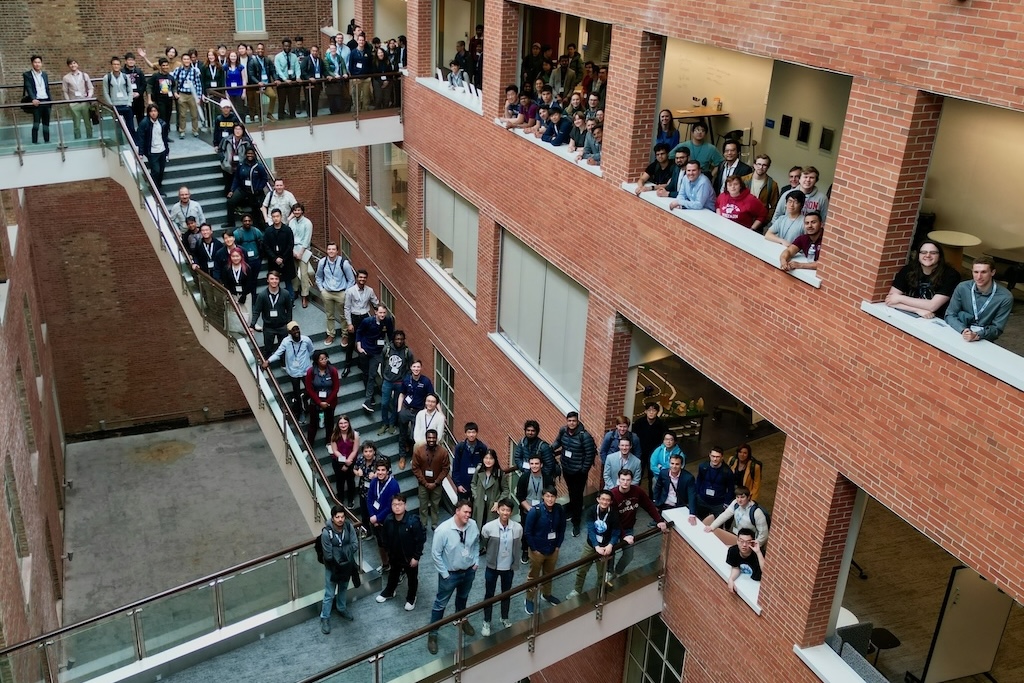
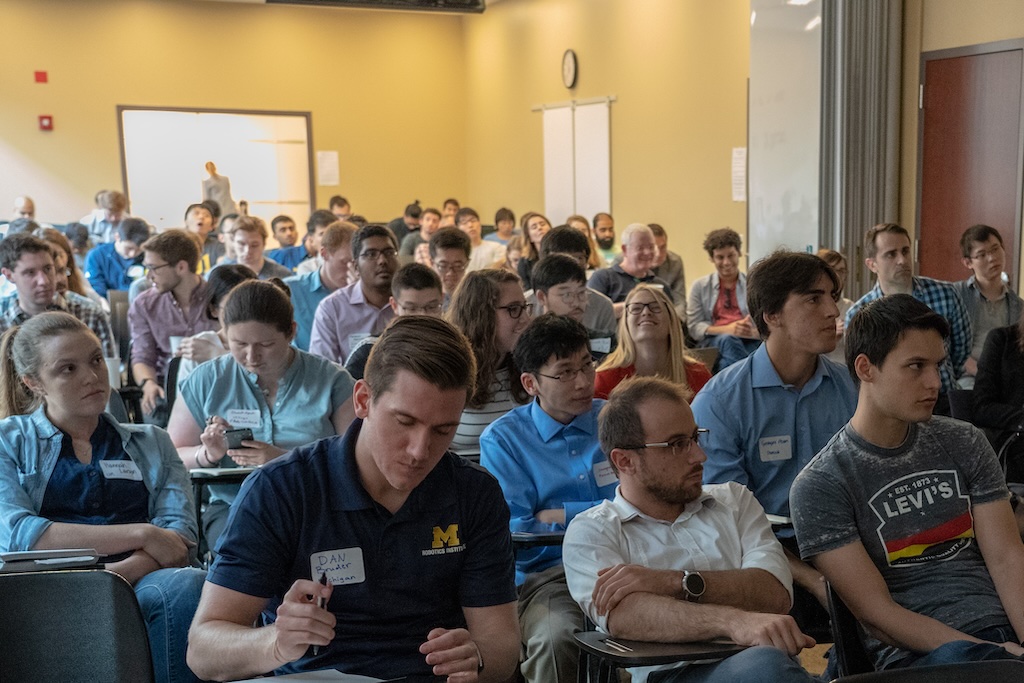
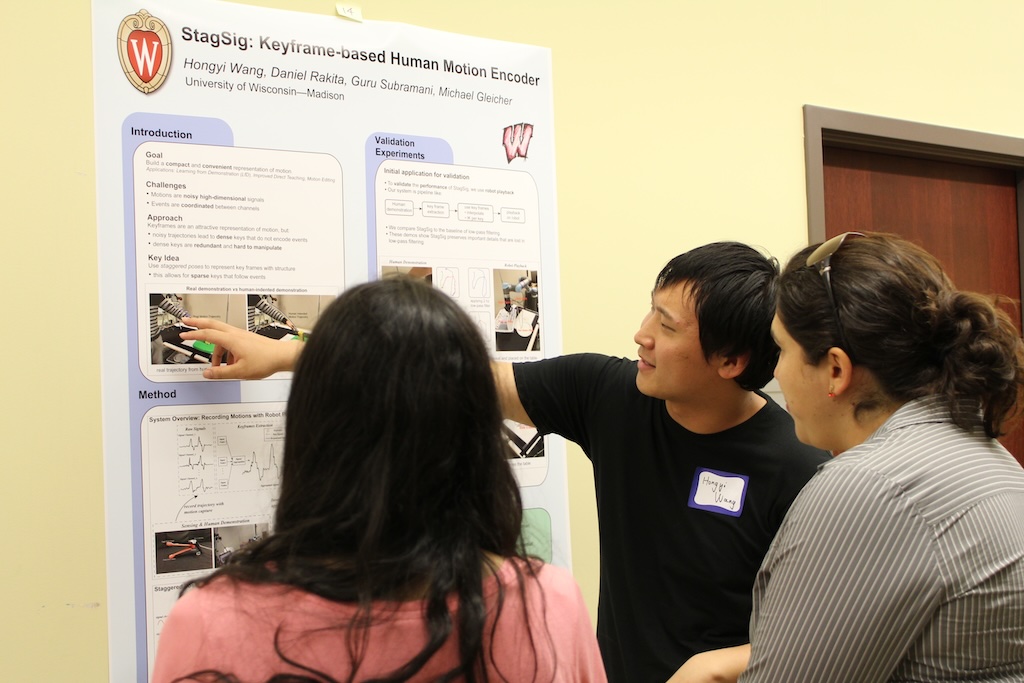
Overview
The robotics field is experiencing tremendous growth as a result of algorithmic and technological advances, the availability of common, low-cost sensors and platforms, and a standardization in open-source development. These factors together with the growing community of talented, highly-trained roboticists combine to render feasible real-world applications in our homes and workplaces, and on our streets.
The Midwest Robotics Workshop (MWRW) is intended to bring together roboticists from academia and industry in and around the Midwestern United States. Building on successful workshops in 2016, 2017, 2018, 2024 and 2025 it is an opportunity for researchers and practitioners to share their work with others and to network, with the goal of creating a more cohesive and vibrant robotics community in the Midwest. The workshop will feature invited talks by leading researchers, and an exciting collection of oral presentations and interactive poster sessions.
If you have any questions, please contact the organizers.
Call for Participation
We invite all roboticists from the Midwest (broadly interpreted) to participate in the Midwest Robotics Workshop to be held at the Toyota Technological Institute at Chicago (TTIC) on the University of Chicago campus (map) on June 11–12, 2026.
We encourage participants to use the workshop as an opportunity to present recent research either as a talk or during an interactive poster session. If you are interested in presenting, please submit a title and abstract summarizing your work. Since the workshop does not have published proceedings, abstracts that describe work that was previously published or is still in progress are welcome.
Keynote Speakers
Peter Stone (University of Texas at Austin)
Outplaying Elite Table Tennis Players with an Autonomous Robot
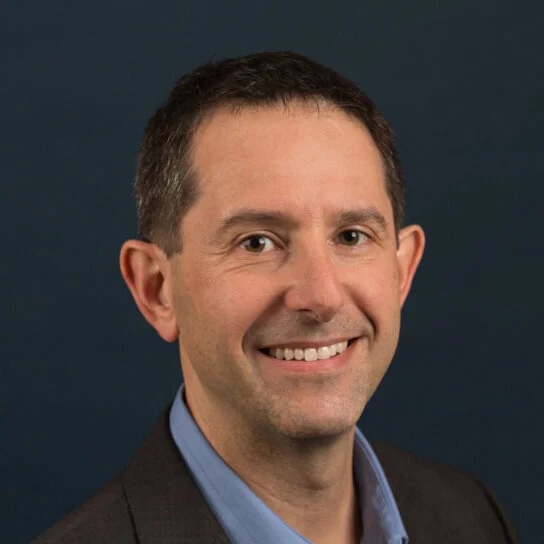
Dr. Peter Stone holds the Truchard Foundation Chair in Computer Science at the University of Texas at Austin. He is Chair of the Computer Science Department, as well as Founding Director of Texas Robotics. In 2013 he was awarded the University of Texas System Regents' Outstanding Teaching Award and in 2014 he was inducted into the UT Austin Academy of Distinguished Teachers, earning him the title of University Distinguished Teaching Professor. Professor Stone's research interests in Artificial Intelligence include machine learning (especially reinforcement learning), multiagent systems, and robotics. Professor Stone received his Ph.D in Computer Science in 1998 from Carnegie Mellon University. From 1999 to 2002 he was a Senior Technical Staff Member in the Artificial Intelligence Principles Research Department at AT&T Labs – Research. He is an Alfred P. Sloan Research Fellow, Guggenheim Fellow, AAAI Fellow, IEEE Fellow, AAAS Fellow, ACM Fellow, Fulbright Scholar, and 2004 ONR Young Investigator. In 2007 he received the prestigious IJCAI Computers and Thought Award, given biannually to the top AI researcher under the age of 35, in 2016 he was awarded the ACM/SIGAI Autonomous Agents Research Award, and in 2024 he was awarded the ACM/AAAI Allen Newell Award. Professor Stone co-founded Cogitai, Inc., a startup company focused on continual learning, in 2015, and currently serves as Chief Scientist of Sony AI.
Brenna Argall (Northwestern University and Shirley Ryan AbilityLab)
Evolution and Translation: Robotics Intelligence to Meet the End-User
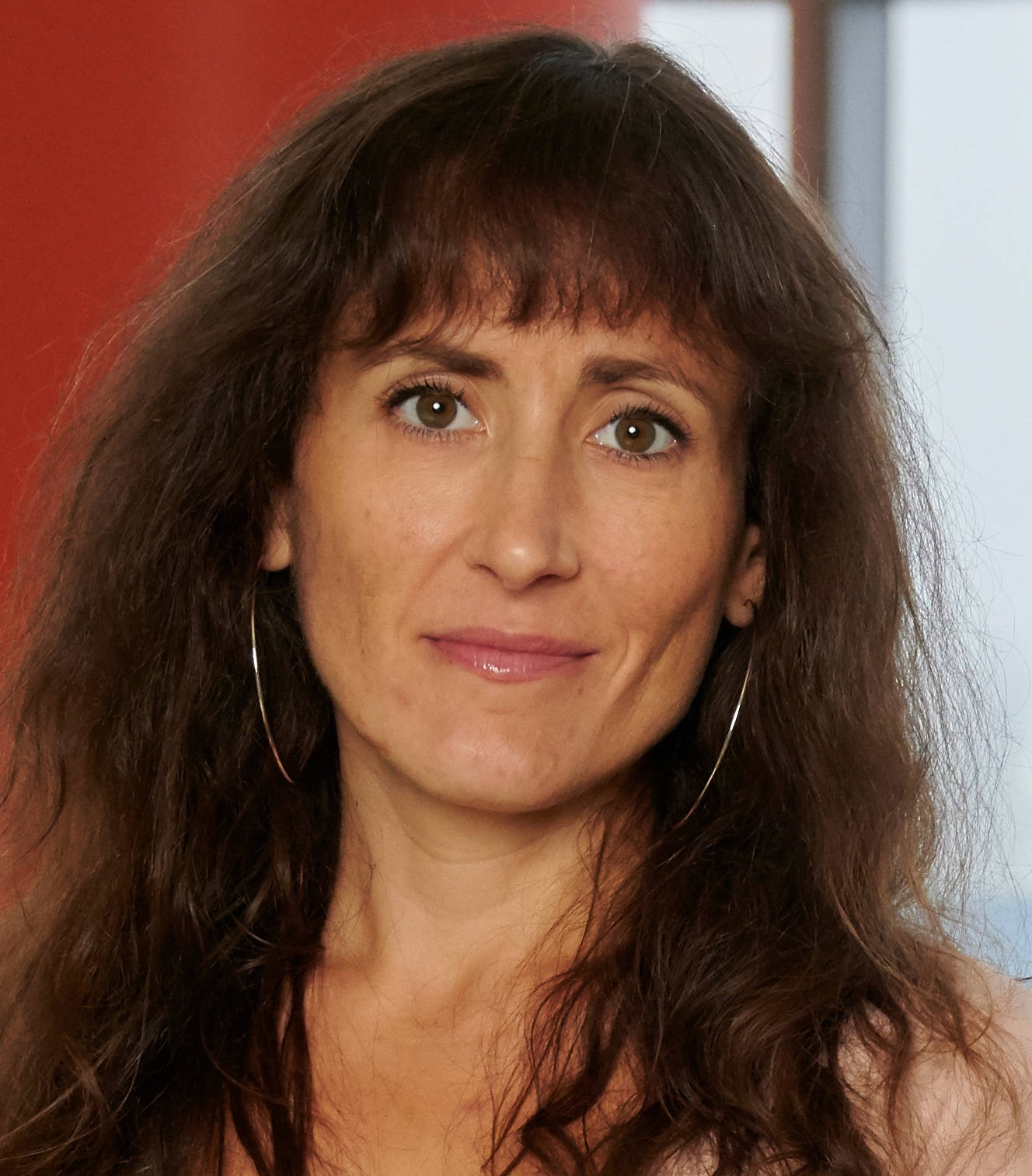
Brenna Argall is a professor of Mechanical Engineering, Computer Science, and Physical Medicine & Rehabilitation at Northwestern University. She is founder and director of the assistive & rehabilitation robotics laboratory (argallab) at the Shirley Ryan AbilityLab (formerly Rehabilitation Institute of Chicago), the #1-ranked rehabilitation hospital in the United States. The mission of the argallab is to advance human ability by leveraging robotics autonomy. Argall is a Fellow of the American Institute for Medical and Biological Engineering (2023), a recipient of the NSF CAREER award (2016), and one of the 40 under 40 by Crain's Chicago Business (2016). Her Ph.D. in Robotics (2009) was received from the Robotics Institute at Carnegie Mellon University, as well as her B.S. in Mathematics (2002). She has been a research fellow at the National Institutes of Health (2002–2004), the École Polytechnique Fédérale de Lausanne (EPFL, 2009–2011), and the Wyss Center for Bio and Neuroengineering (2019) in Geneva, Switzerland.
Invited Speakers
MWRW 2026 will feature talks by senior researchers, early-career faculty, and students. Some of the confirmed speakers include:
Awards
Congratulations to this year's Best Poster Award winners!
- First Place
- A Unified Bar-and-Hinge Modeling Framework for Architected Soft Materials
- Second Place
- Sequential Monte Carlo for Model Predictive Control
- Third Place
- Reducing Knee Torque during Sit-to-Stand Transitions through Parallel Elasticity: A Passive Exoskeleton Approach
Thank you to the many participants who volunteered to judge the poster sessions.
Important Dates
| May 10, 2026* | Registration and Abstract Submission Deadline (Register here) |
| May 10, 2026 | Student Lodging Grant Application Deadline (Apply here) |
| June 11–12, 2026 | Workshop |
*Note: Registration will close early if we reach maximum capacity.
Program
The workshop will start at 09:30am on Thursday and will end with lunch on Friday. Breakfast and lunch will be provided both days. The program will include invited and contributed talks, as well as poster sessions.
The following times are subject to change.
Thursday, June 11
| 09:30–10:00am | Breakfast (provided) |
| 10:00–10:15am | Welcoming Remarks |
| 10:15–11:15am | Keynote Talk (Chair: Matt Walter) |
Outplaying Elite Table Tennis Players with an Autonomous Robot |
|
| 11:15am–12:45pm | Invited/Contributed Talks (Chair: Dan Bruder) |
| 11:15–11:35am | Real-Time Motion Planning for Any Robot |
| 11:35–11:55am | Electrical Sensing, Actuation and Control of Soft Robots: Towards Wearable and Implantable Systems |
| 11:55am–12:15pm | A Leg Up: It Takes Just One to Jump |
| 12:15–12:35pm | CLAW: Learning Continuous Latent Action World Models End-to-End via Adversarial Latent Regularization |
| 12:45–02:15pm | Lunch (provided) and Poster Session I |
| 02:15–04:00pm | Invited/Contributed Talks (Chair: Kathryn Daltorio) |
| 02:15–02:35pm | Coordination and Motion Planning Strategies for Multi-Vehicle Systems in Communication-Constrained Environments |
| 02:35–02:55pm | Fantastic Machines and Where to Find Them |
| 02:55–03:15pm | Robotic Assessments of Bilateral Coordination in Neurologic Conditions Across the Lifespan |
| 03:15–03:35pm | Robots that Know What They Do Not Know: Safe Planning Under Perceptual and Linguistic Uncertainty |
| 03:35–03:55pm | Convexity and Compliance for Better Design, Control, and Estimation of Your Wearable Robot |
| 04:00–05:30pm | Poster Session II and Happy Hour |
Friday, June 12
| 09:00–10:30am | Breakfast (provided) and Poster Session III |
| 10:30–11:30am | Keynote Talk (Chair: Matt Walter) |
Evolution and Translation: Robotics Intelligence to Meet the End-User |
|
| 11:30am–01:00pm | Invited/Contributed Talks (Chair: Ram Vasudevan) |
| 11:30–11:50am | The Micro Made Macro: Microsurgery at Human Scales |
| 11:50am–12:10pm | Worker-Robot Collaboration: Exploring Emerging Labor Issues |
| 12:10–12:30pm | TBD |
| 12:30–12:50pm | Shared Autonomy: A Unified Framework for Dynamic Agency Allocation in Human-AI Systems |
| 01:00–01:15pm | Closing Remarks and Best Poster Award Announced |
| 01:15–02:30pm | Lunch (provided) |
Poster Session I (Thursday)
CARL: Contraction-Aware Reinforcement Learning for Robust Path-Tracking
Adaptive Time-Stepping for Massively Parallel Hardware Accelerated Robot Simulation
Bridging Simulation and Real-World Manipulation with Vision-Language-Action Models on UR3 Robots
Assessing Activation Functions for Hybrid Learning Control of an Upper-Extremity Exoskeleton
Embodied-AI: Automating Body Movements to Provide Users with Physical Assistance
Distributed Pneumatic Energy Storage for Burst-Actuation, Untethered Inflatable Robots
Distributionally Robust Extended Kalman Filter
Do You Know Where Your Camera Is? View-Invariant Policy Learning with Camera Conditioning
Autonomous Robotics Immersions for High School Students & Teachers (ARM)
Biased H-LIP Control for Walking on Sloped and Accelerating Ground
Beyond Motion Imitation: Is Human Motion Data Alone Sufficient to Explain Gait Control and Biomechanics?
Design and Implementation of Novel 7-bar Variable Stiffness Mechanism Based on Singularities
Dynamic Spin-Stabilized Throws: Tight-Spiral American Football by a Humanoid Robot
SAFE: A Black-Box Safety Evaluation Benchmark for Autonomous Mobile Robots
Comparing Human Grasp Control of Rigid and Compliant Grippers in Assistive Robotic Manipulation
Adaptive Locomotion in Salamander-Inspired Robot via Central Pattern Generators and Reinforcement Learning
Computational Design of a Spherical Five-bar Flipper Mechanism with Ellipse Synthesis
A Unified Bar-and-Hinge Modeling Framework for Architected Soft Materials
Design, Simulation, and Locomotion Analysis of a Modular Sea Star-Inspired Robotic Ray with Passive Anisotropic Friction
Flow Shared Autonomy with Anomaly Detection
Adapting Rigid-Body Dynamics Derivatives for Constraint Embedding Closed-Chain Models
Betting for Sim-to-Real Performance Evaluation
Curating User-Defined Interface Maps for Robot Teleoperation
Attachment-Free Hand-to-Robot Control with RGB-D Learning
Poster Session II (Thursday)
MICSR: A Mixing, Current-Sensing Robot
Maneuverability of a SMA-Embedded Soft Flagellated Swimmer in Viscous Environments
GeoVLM: Multimodal Fusion of Vision Language Models and LiDAR for Explainable Trajectory Prediction in Autonomous Driving
Importance Sampling Meets Predictive Advantage at Sea: Rare-Event Safety Testing for Legged Locomotion in Non-Inertia Environments
Multifunctional Soft Robotics Enabled by Multimaterial Extrusion Manufacturing
High Strength Latching for Soft Growing Vine Robots
Linking Exteroception and Proprioception through Improved Contact Modeling for Soft Growing Robots
Parallel Simulation of Contact and Actuation for Soft Growing Robots
MuxGel: Simultaneous Dual-Modal Visuo-Tactile Sensing via Spatially Multiplexing and Deep Reconstruction
Language-Guided, Map-Free Navigation Using Vision-Language-Action Models (VLA)
Multi-Node Inertial Motion Capture Device
Integrity Monitoring for Collaborative Localization of Connected and Automated Vehicles
Parameter-Efficient Fine-Tuning of Vision-Language Models for Pedestrian Intent Prediction
OptiWeb: A Web-Based Framework for Reproducible Trajectory Optimization
Model Predictive Control in Resource-Constrained Hardware
Motion Design for Grasp-Based Dynamic Locomotion in Microgravity
HapCompass: A Rotational Haptic Device for Contact-Rich Robotic Teleoperation
HybridMimic: Hybrid RL-Centroidal Control for Humanoid Motion Mimicking
Mechanics of Defect-Induced Failure in Dielectric Elastomer Actuators
Origami-Inspired Fluidic Logic Devices for Mechanical Intelligence in Soft Robots
Novel Design, Fabrication and Control of Bio-inspired Magnetic Microrobot
Geometrically Tuning Soft Joints to Mimic Intervertebral Joint Mechanics
Geometrically Tuning Soft Joints to Mimic Intervertebral Joint Mechanics
Learning Tactile-Aware Quadrupedal Loco-Manipulation Policies
Poster Session III (Friday)
Safe Social Robot Navigation with Behaviorally Adaptive Human Models in Efficient Spaces
Shared Autonomy: A Unified Framework for Dynamic Agency Allocation in Human-AI Systems
Physics-Guided Flow Matching for Humanoid Loco-Manipulation
Spacecraft Relative Motion Simulation using Cable-Driven Parallel Robots
Variational Shape Inference for Grasp Diffusion on SE(3)
PyRoFFI: Accelerating Foreign Kinematics Kernels
SLUGBOT V2: An Aplysia-Inspired Robotic Grasper with Improved Anatomical Accuracy
Sequential Monte Carlo for Model Predictive Control
Towards Estimating Interface Forces in Prosthetic Sockets via Least Squares and Mechanics Modeling
Towards Functional Return-to-Sport Assessment after Anterior-Cruciate-Ligament Reconstruction: A Wearable Framework to Estimate Muscle Strength
Soft Surfaced Vision-Based Tactile Sensing for Bipedal Robot Applications
SafeNet: A Neural-Symbolic Network for Safe Planning in Robotic Systems using Formal Method-Guided LLM Fine-Tuning
Reducing Knee Torque during Sit-to-Stand Transitions through Parallel Elasticity: A Passive Exoskeleton Approach
Towards Context-Aware Task Learning and Moderation via User Manipulable Tabletop Multi-Robots
TacScope: A Miniaturized Vision-Based Tactile Sensor for Surgical Applications
Spherical Robot with Two Actuated Internal Pendulums
The AI-Assisted Ellipse Synthesis Framework: Achieving both Design Exploration and Tuning of Planar Robot Mechanisms
PopTuber: Discretely Reshaping High Resolution 3D Curves with “Serial Multistable” Tubes
SAATT Nav: A Socially Aware Autonomous Transparent Transportation Navigation Framework for Wheelchairs
TacVLA: Contact-Aware Tactile Fusion for Robust Vision-Language-Action Manipulation
What Matters in Vision-Tactile World Models for Contact-Rich Manipulation
Synergizing Fingertip Sensing and a Tactile Active Palm for Dexterous In-Hand Manipulation
Accommodations
There are several hotels nearby the University of Chicago campus in Hyde Park, where TTIC is located. These include:
- The Study (a five-minute walk from TTIC)
- Hyatt Place Chicago-South
- Sophy Hotel
See this list for more options, including hotels in downtown Chicago.
Lodging Grants: We will provide a limited number of grants for student lodging at a nearby hotel for the night of June 11. Please see the Registration section for information on how to apply.
Parking: Free parking is available in the commuter parking lot at 60th St. and Stony Island Ave., as well as on many nearby streets (please be aware of permit parking and street-cleaning restrictions). Street parking is often available on 61st Street (between Woodlawn Ave. and Blackstone Ave.) and on Dorchester Ave. (between 60th and 61st Streets).
Registration
Registration: If you are interested in presenting your work as a poster or talk, or would like to simply attend the workshop, please sign up here. There is no cost to register. Please note that the schedule is pretty tight, so we may not be able to honor every presentation request.
Lodging Grants: We are awarding a limited number of lodging grants for students from outside the Chicagoland area who would like to attend. The grants will provide a one-night stay at a nearby hotel on June 11. Please fill out this form if you would like to apply.
Organizers
Kathryn Daltorio (Case Western Reserve University)
Ram Vasudevan (University of Michigan)
Matthew Walter (TTIC)

Last modified: June 18 2026 08:24:03